
I have offered six babies to the fishless sea. And not one has been returned to me.
Seafoam lathers between my toes. Fog swirls; like cornflour in salted lukewarm water, it bubbles on throat. Above the Palionisos cove, the sky’s purple—a splash of grape syrup to serve doughy bread—leaking through, unbothered. Flimsily, I lower the bundle of rosy membrane and blood on the soft sand, knees bending inward, a familiar pull, allowing water to consume it.
The women say it knows best, the sea. It might take pity on you this time, they whisper. Mama, instead, croaks. In the dead of night. Urging.
Turn the other way again; kill them all.
I shudder, almost tumble. Wet sand sits between my toes, itching. Do I have a choice?
The village I call my home is nothing but a fruitless phantom. No fish inside our sea, not since the war harvested our men. The children we had, their lineage, passed away out of hunger or despair. Only the women are left. Ceaselessly tending to the needs of our occupiers; Italians. Germans. English. Banners of different colours waving about our land, sinking it. The soldiers take pleasure in sponges, partake in celebrations. Tarnishing our bodies.
Survival is banners tied together, reds and blues, greens and yellows, a foreign patchwork waving across our land; we pay in chewed-up seashells and lichen skin.
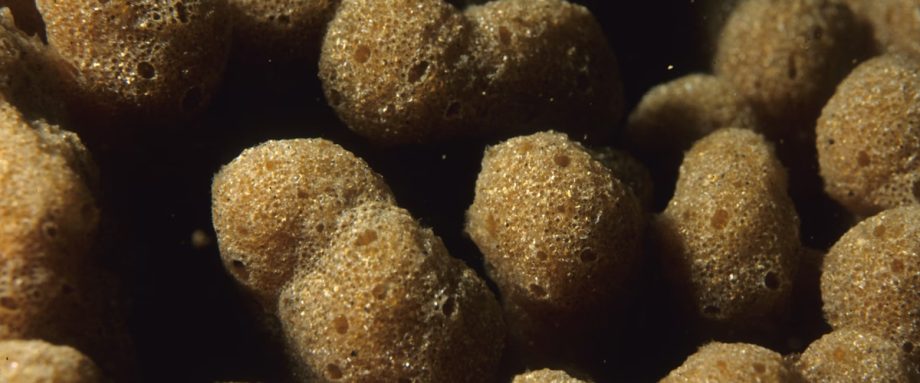
Yet, the sea heard our pleas after years of begging. During sponge diving, it now flows inside us, shaping eggs in our abdomen, impregnating us. It is cruel; it knows no baby can live for long with water in its lungs, but it demands we dive either way. All our babies are born dead. We offer them in the winter, giving the salt time to brew around tendon and sinew. Eye and tooth. Let it nurture until spring, the next diving season, when we discover half of what we bore has turned into sponges. These sponges keep our economy alive and the occupiers satisfied. The other half comes back to us: fully-fleshed girls, starlight woven in their hair, silver eyes glimmering.
I wash the bundle’s tidbits away. Under my nails, the webbing of my fingers, at the base of my hands. No foreign skin on mine, not a flap of alien sheen thriving in my palms.
I don’t look at it. This bundle, as my old six, is but a footprint of life. Thrust onto my womb by the power of the sea. A colonizer. It’s not my own; never will be. Mama always told me that I’d feel life bustling inside, latching onto my belly, biting to get out. But my bundles don’t move or stir. They look better on the bottom of the Aegean Sea, soft and porous, waiting to be washed ashore and sold.
Turn the other way again; kill them all.
Screams of joy slice through my tiny shack, roof groans in dread.
‘It spews!’
‘It gives!’
Urgent knocking on the door; tumultuous and ear-splitting, like today’s rain beating on the panes. Another sponge diving season. I cut myself—generous drops of thick blood trickling onto the bowl, grape syrup mixed with my excess.
‘Won’t you dive with us?’ Avgoula, my neighbor next door, owns a collection of three sponges and four children in her household. One of the lucky ones.
On the window sill, just above my sink, six natural sponges lie in silence. They’re all different kinds of beige and brown, some softer, others rougher. Some richer in texture; others, thinner. My kind of specialty: a mother’s womb remnants dressed as the sea’s eggs—the best quality sponges in the Mediterranean. Porous clouds you can squish and smell and bathe with—invaders’ memorabilia.
Don’t, Asteria. Just stir the pot. Wait for the cornflour to clot. The batzina must be served before grape syrup crystallizes.
Avgoula knocks again. ‘Open the door, girl, you want to end up like your Mama?’
Mama denied the sea’s calling last year. Birthing a baby a year shrank her womb, rotting it. Gradually, Mama had claimed Yiayia called onto her, speaking sotto voce in the waves, promising eternal salvation. The night Mama decided to pin herself forever under the watery blankets, Mama had stirred me in my sleep.
I had turned the other way.
Unhurriedly, I unlock the door. My stomach aches, and the batzina will turn stale, but missing meals means more food on the table.
‘The sea hates me,’ I cling onto the door, hopelessly reaching out. But, Avgoula drags me to the shore.
She snaps amidst fluttering golden locks. ‘So long as you have a womb to offer, you’ll dive in.’
I ask Holy Mary to quieten the ghost in my house. Mama’s presence still lingers in the utensils I use, the braids I swirl around my head. She drips well-polished talons on my chest, the hue of lingering, scheming:
Turn the other way again; kill them all.
I have offered nine babies to the fishless sea and one of them has been returned to me. She turned two this week—on the same day, our thirty-seven years of foreign occupation, ended. Dodecanese is finally free.
But the sea doesn’t loosen its hold; it has grown fond of us.
She loves sitting on top of the sink, under that damned window sill, playing with the sea sponges. She gives them names—pretending they’re a family.
When I tuck her to sleep, I hold the knife behind my back. Her petite frame turns and twists like summer waves on the heated beach. It’d be easy to slice through her little body, let blood stain her stray mattress, drown her small mouth.
Turn the other way again; kill them all.
Do I have a choice?
I am nothing but seafoam lathering on toes. Sea and air combines, lulling me to sleep right where sponge and baby sprouts.
I understand now. How Mama wished to protect me from her fate, whispering at night long after her death. Acting like the sea itself—invasive and cruel—and unlike her, fickle, finicky.
At night, I walk alone by the cove, naked and with no shoes on, carving the shape of my womb with the loose knife. I offer one last thing to the sea, days after my island got free. Something it will mourn, something I will gladly part with.

Issue 12
SEA GATE

Sophia-Maria Nicolopoulos works as an Editor-in-Chief for a romance publishing house in the day. At night, she writes whimsical horrors, uncanny desires, and fever dreams inspired by Greek folklore and myths. Her short fiction can be found in The Deadlands, Inner Worlds, and Alternative Milk.