
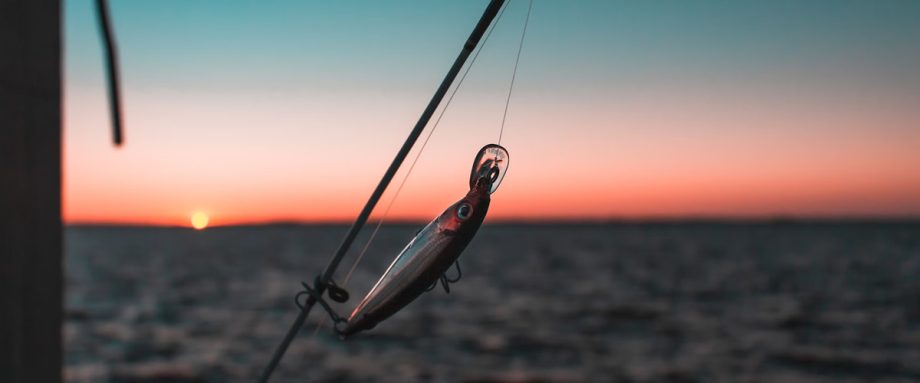
The raven before me stands atop a stump, talons carefully navigating its serrated edges, tearing at the flesh of a fisherman’s forgotten catch. I watch from a few paces away, absently digging the toes of my boots into the beach’s pebbles. Their soft clinking weaves into the beach’s chorus of crashing cold waves and the ever-present din of the waterfall rushing into the estuary, combating the whispered conversation of spruce boroughs dancing to the wind.
Reluctant to leave their shelter for the full force of the rain, I walk to the water slowly. My hands hold the long, graceful rod of a pole, my fingers tight over the ocean-grade titanium reel. As I get closer to the waves, I’m greeted by their scent of brackish salt, their rushing sensation of slick adrenaline.
The ocean here is intensely different from the one I grew alongside on the other side of the country, on a coast of warm sand and deep cerulean water. Here, on this pebbled beach obscured by thick rainforest clouds, the waves hold a ferocity. They roar as they reach the cliffs, spray salt and weed and chill into the air.
The birds are not the same as the ones of my childhood coasts, who strolled amongst bright umbrellas, content to find the remnants of a scattered lunch. Here, they squaw and fight and race to rip flesh from bone. They were raised by the dark wind and monolithic mountains that rise from the sea in their herds of robust rock. They contend with those who thrive in cold waters, who spend their winter months content beneath thick ice.
But in this landscape where I’ve found myself, solace still exists on its shores.
I fill my belly alongside the others who rely on those beneath the waves. Alongside the raven and the gull and the bear, working just as the moose and the otter and the seal do. We all squaw and fight and race to rip flesh from bone. For we all feed here.
It’s now the height of summer, which means fish run in the waters until the surface boils with their movement, where rain runs into my eyes so that I can’t see what I’ve caught until it’s in my hands. Where the mountains cannot be seen beneath their thick comforter of clouds—but their presence is felt. Their supervision is sure.
The raven on the stump continues to feed, and my mouth waters the longer I watch. I inhale deeply as I turn toward the water and wheel my arm back, numb finger pressed against thin line. And then I release. The line flies into the rocking tide, lost amidst its roiling, angry waves. I notch the reel and feel the sensation of the swell from hook to line to hand. I breathe deeply again, connected to the surge of the tide. Just another being within its vast grasp, held within the palms of salty necessity.
My hook catches the smooth rocks beneath the surface, and my breath comes in aggravated, short bursts as I brace my boot against a boulder and angle my rod right and left to pull it loose. An otter watches from his spot on his back, lackadaisical, rocking atop the waves. We regard one another easily, warily, as all animals do on these wind-whipped shores. His head ducks beneath the grey and resurfaces with something small and flapping in his fingers. My frustration mingles with jealousy as my stomach rumbles with the waves.
Fishing lives deeply within my bones. Warm nights of my childhood are dog-eared with the scents of bug spray and brine on muddy water. I still feel the elation of throwing my lore to the blushing sunset sky, urging bats to follow its trail back to the water. My fingers are ensconced with the familiar feeling of tracing a line through a hook, of sliding a blade between filet and scale.
Yet, the act feels different in this landscape, which holds both familiarity and foreignness at the tip of its tongue. There are no cricket songs riding on the back of a transitioning sky, nor the burn of sweat falling into eyes. Instead, the resounding cry of the raven, the sensation of rain whipping through the wind’s cacophony, peppering exposed skin.
The world is painted in different strokes at this latitude. I brought myself out to catch breakfast beneath a leaden sky, squinting against the storm; I brought myself to a place where the lands exist in technicolour and potency.
Then, a tug of life at the end of the line. My heart jumps, my hands race into motion. A tug, a reel, a silent play between shore and surf. A relation closer than night’s passion in a moment between two lives separated by white form and moistened air. Moments later, a flounder emerges on the shore, pale body flopping against their own sudden unfamiliarity.
The world quiets as I kneel beside them. I feel the raven eyeing me from the stump, and I turn my body to guard against other eyes and assaulting rain.
I whisper to the fish my thanks, my sorrow, my gratitude. I offer solace as they leave on foreign terrain, so close and so far from their frigid home.
I clean them on the slick rocks, allowing the gathered birds a fresh feast. I carefully gather my filets into a bag and trek back to the promised warmth beneath the spruce, where my small grill lies hidden from the rain. Life is different here than where I grew up, but my gratitude for walking from the water with a rod in one hand and a fish in the other remains the same.
I can’t help but think of the warm waters of my childhood when I stand on these chilled shores, but I know if I were ever to return, I would think of dark boroughs swaying in cold winds and a raven sitting atop a stump, waiting for another fresh catch.

Issue 13
FOUND FOOTING

Bridget Klein is a writer and environmentalist who can never seem to keep her feet still. She has been featured in podcasts and radio specials, and her work has been published in The Environment, In Living Color, and 365 Tomorrows, among others.